
The Lotus Light
Overview
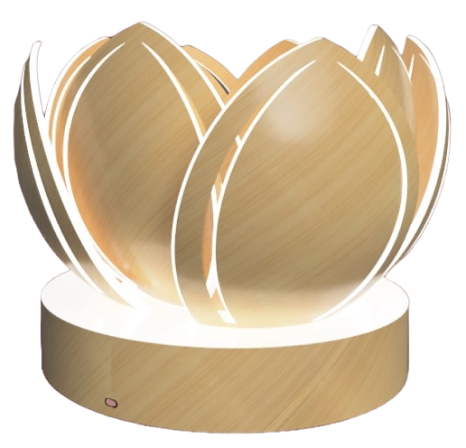
A sculptural table lamp that explores organic form, layered geometry, and soft light through hands-on iteration and Fusion 360.
Role & Tools
Role:
End-to-end product designer
Tools:
Sketching, paper prototyping, Fusion 360, light testing Ideation & Sketching
Overview
The Lotus Light began as an exploration of how an object can feel calm, intentional, and visually light. Inspired by the way a lotus opens in layers, the goal was to design a lamp that feels considered both when it’s on and when it’s off.
Rather than jumping straight into CAD, the design evolved through sketching, paper prototyping, and iterative modeling, using physical testing to guide decisions about form, spacing, and light.
Ideation & Sketching
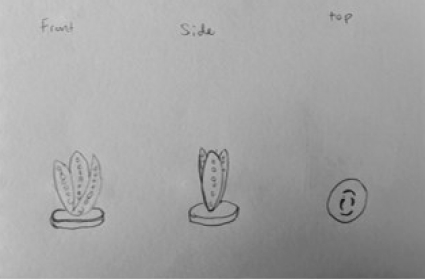
I started with loose sketches to explore silhouettes and petal-like forms, focusing on how the lamp could open upward while still feeling grounded. These early drawings were less about precision and more about flow. As the direction emerged, I refined select concepts into orthographic sketches to better understand proportion, repetition, and how the layers might interact.
Paper Prototyping
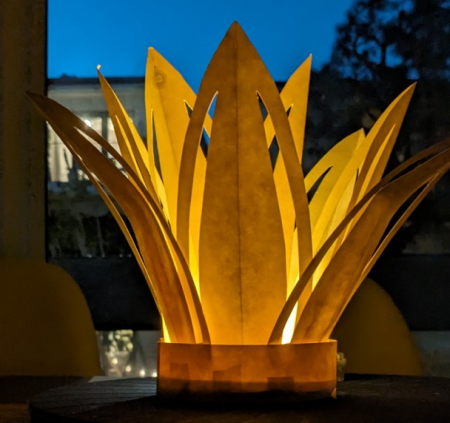
Paper became the fastest way to answer questions sketches couldn’t. By building physical models, I could test scale, layering, and how light moved through the form in real space.
Seeing the same model unlit and illuminated revealed where the design felt too dense, where shadows became harsh, and where the form started to lose its softness. These moments directly shaped the next iteration.
Iteration & Refinement
Iteration wasn’t about making the form more complex, but about knowing what to remove. Through testing, I reduced petal count to avoid visual clutter, softened edges to create a more fluid silhouette, and adjusted spacing to let light breathe between layers.
Version 1

Version 2
CAD Development
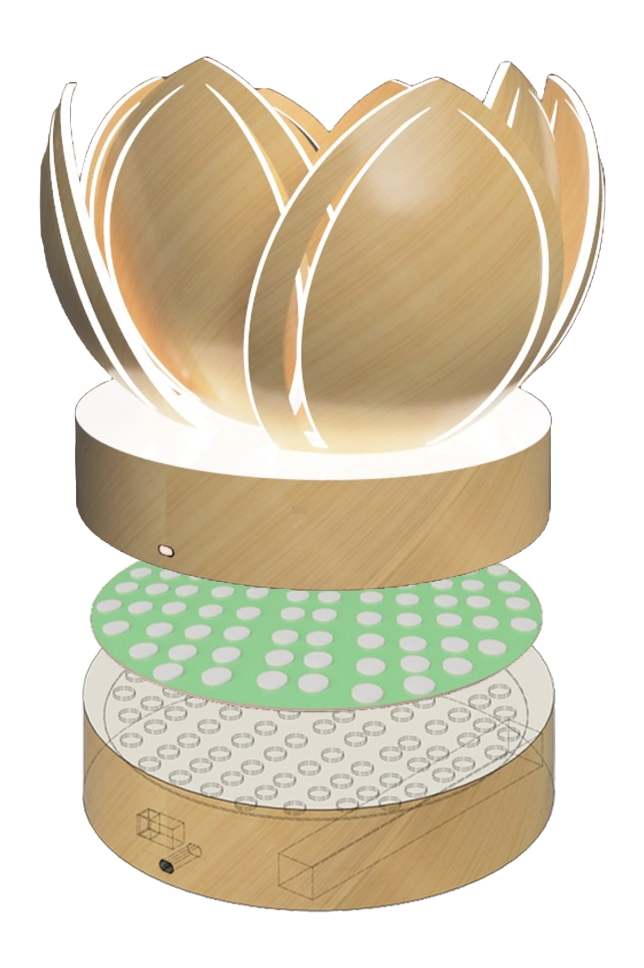
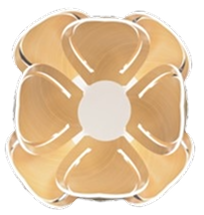
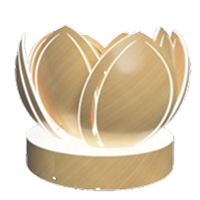
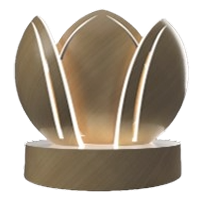
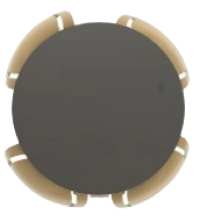
With a clear physical reference, I translated the refined form into Fusion 360. The model was built parametrically to maintain control over curvature, spacing, and scale. Individual petal components were designed for repeatability, while the base was developed to support both the structure and internal lighting
Top
Front
Side
Bottom
Materials & Light
The layered petals act as both form and diffuser, softening the light rather than directing it. Material choices were guided by how light behaved in the paper prototypes, ensuring the final design retained warmth, depth, and a sense of quiet glow.
Final Outcome
The final Lotus Light is a sculptural table lamp that balances organic expression with structural clarity. More than a finished object, it represents a process grounded in making, testing, and refining through multiple mediums.
Key Takeaways:
Making early and often revealed issues no screen could Subtle changes in form dramatically changed light behavior Physical prototyping grounded digital decisions